
LiT-Met launched its research programme with a kick-off meeting in Bologna on 6–7 July 2026, bringing the consortium together around a shared ambition: stronger evidence for more personalised care.
Back to Media →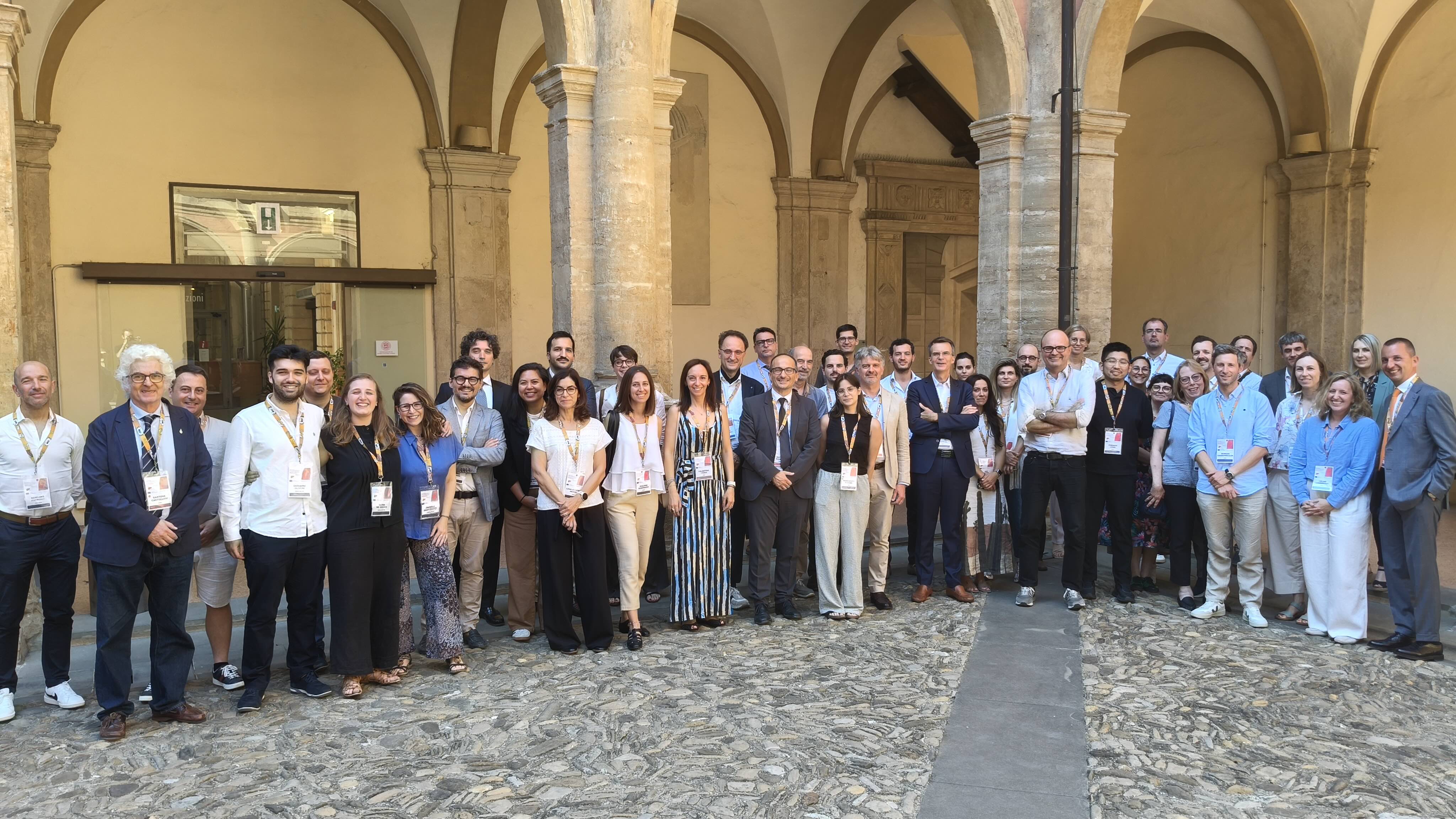
A €10 million Horizon Europe project will generate the evidence needed to determine whether liver transplantation can become a life-extending treatment option for selected patients with colorectal liver metastases.
Bologna, Italy – July 6th, 2026 – The European project LiT-Met (Liver Transplantation for Colorectal Liver Metastases: An International Real-Life Analysis of Post-Transplant Outcomes) has officially started under the Horizon Europe Cancer Mission.
Coordinated by the University of Bologna, LiT-Met brings together leading transplant centres, oncology specialists, researchers, artificial intelligence experts, patient advocates and policy organisations from across Europe to address one of the most pressing challenges in colorectal cancer treatment: improving outcomes for patients whose cancer has spread to the liver.
Over the next five years, the consortium will investigate whether liver transplantation can offer superior long-term survival and quality of life compared with current surgical approaches for carefully selected patients with colorectal liver metastases (CRLM), while also developing the clinical, biological and policy tools needed to support future implementation across Europe.
Colorectal cancer is among the most common cancers worldwide and remains a leading cause of cancer-related mortality. For many patients, the disease eventually spreads to the liver, which represents the main cause of death in this population.
Surgical removal of liver metastases is currently considered the standard potentially curative treatment. However, a substantial proportion of patients present with complex or borderline resectable disease, and long-term outcomes remain unsatisfactory. Despite significant advances in systemic therapies and surgical techniques, recurrence rates remain high and many patients ultimately experience disease progression.
Recent clinical evidence has challenged long-standing assumptions regarding the role of liver transplantation in this setting. Once considered contraindicated for patients with colorectal liver metastases, liver transplantation has shown remarkably promising results in highly selected patient groups, with survival outcomes substantially exceeding those historically reported for conventional treatments.
These findings have generated considerable scientific interest and opened an important debate within the transplant and oncology communities. However, significant questions remain regarding patient selection, long-term outcomes, biological predictors of success, cost-effectiveness, healthcare system implications and equitable access to transplantation.
LiT-Met has been designed to provide the robust evidence required to answer these questions and support future clinical decision-making.
LiT-Met will create one of the largest and most comprehensive European research efforts ever undertaken in the field of transplant oncology.
The project brings together multidisciplinary expertise spanning liver transplantation, surgical oncology, medical oncology, pathology, molecular biology, radiology, bioinformatics, artificial intelligence, health economics, patient engagement and health policy.
Through a multicentre international collaboration, the project will collect and analyse real-world clinical data from patients undergoing liver transplantation and liver resection, generating high-quality evidence on survival, recurrence patterns and treatment outcomes.
At the same time, researchers will investigate the biological mechanisms underlying treatment response through extensive molecular profiling of tumour tissue and liquid biopsies. These analyses aim to identify biomarkers capable of predicting which patients are most likely to benefit from transplantation and to better understand the biology of metastatic disease.
A major innovation of the project will be the development of advanced artificial intelligence tools capable of integrating clinical information, imaging data, pathological findings and molecular characteristics into personalised prognostic models. These tools will support clinicians in identifying the most appropriate treatment strategy for individual patients and contribute to more precise and evidence-based decision-making.
Coordinating this consortium of major European transplant centres represents both a privilege and a responsibility. Our ambition is to generate practice-changing evidence in the management of colorectal liver metastases, one of the leading causes of oncological mortality in Europe and worldwide.
Prof. Matteo Ravaioli, University of Bologna
Project coordinator LiT-Met
LiT-Met recognises that successful cancer treatment must be evaluated not only through survival outcomes but also through its impact on patients’ lives and on healthcare systems.
For this reason, the project will incorporate patient-reported outcomes and quality-of-life assessments throughout its research activities. Patients and patient organisations will actively contribute to the project, ensuring that their perspectives inform both research priorities and future recommendations.
In parallel, the consortium will conduct a comprehensive health-economic evaluation comparing liver transplantation and conventional surgical approaches across different European healthcare settings. This work will provide critical evidence for policymakers and healthcare authorities seeking to balance clinical benefits, resource allocation and long-term sustainability.
The ultimate ambition of LiT-Met is to support the development of harmonised European recommendations and contribute to future adaptations of national organ allocation policies, ensuring that eligible patients can access innovative life-extending therapies regardless of where they live.
By combining clinical evidence, molecular science, artificial intelligence, patient perspectives and policy analysis, LiT-Met seeks to establish a new framework for evaluating and implementing liver transplantation in colorectal liver metastases.
The project represents a unique opportunity to bridge the traditional boundaries between oncology and transplantation medicine and to accelerate the emergence of transplant oncology as a recognised multidisciplinary field.
If successful, LiT-Met could help transform treatment pathways for patients across Europe, enabling more personalised care, improved survival outcomes and better quality of life.
LiT-Met (Liver Transplantation for Colorectal Liver Metastases: An International Real-Life Analysis of Post-Transplant Outcomes) is a Horizon Europe Research and Innovation Action funded by the European Union under Grant Agreement No. 101290423.
The project runs from July 2026 to June 2031 and brings together 21 organisations across Europe, led by the University of Bologna.